Introduction
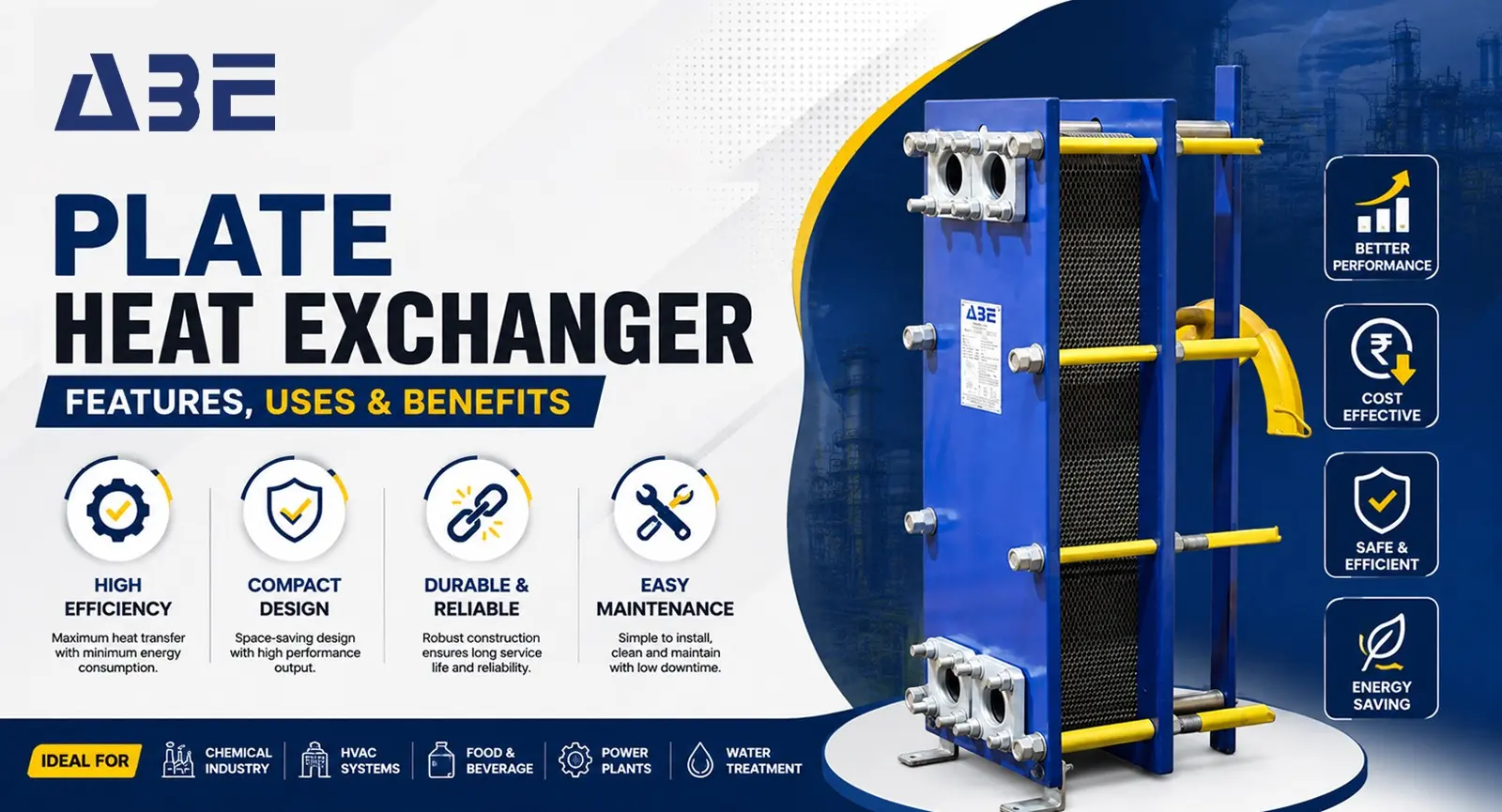
In any process where heat must move from one fluid to another, whether heating a product, cooling a machine, or recovering waste energy, the choice of heat exchanger directly affects energy bills, footprint, and uptime. For many modern plants, that choice is increasingly a plate heat exchanger. Compared to older shell-and-tube designs, it delivers more heat transfer in less space, with easier access for cleaning and expansion.
But what makes this exchanger different, and where does it deliver the most value? This article breaks down the key features, typical uses, and benefits, along with practical considerations when selecting one for your process.
Features That Affect Performance
Not every plate heat exchanger reacts the same way, even when two units look similar from the outside. A handful of specific features determine how well one holds up under the operating conditions. The following are the features of these heat exchangers:
- Plate material needs to match the fluids involved, since stainless steel handles most general applications well, while titanium or specialty alloys become necessary for highly corrosive fluids or seawater applications.
- Gasket type and quality directly affect both sealing reliability and maximum operating temperature, and certain elastomers degrade quickly under conditions a better gasket material would handle without issue.
- The pattern of corrugation of the plates in a Plate Heat Exchanger affects the balance between the efficiency of heat transfer and the pressure drop, so that a pattern optimised for maximum heat transfer alone may sometimes create more flow resistance than a particular application can tolerate.
- Number of plates and flow arrangement determine the unit’s total heat transfer capacity, and this needs to be sized correctly for the flow rates and temperature requirements, not just general estimates.
Buyers often focus heavily on overall size or price without checking plate material and gasket quality closely enough, and those two factors frequently determine how much time the unit lasts under the same operating conditions.
Benefits of a Plate Heat Exchanger
Beyond how it moves heat and where it gets used, there’s a reason why so many facilities choose this design over the alternatives once you look at what it delivers day to day. The following are the features of the exchanger:
- Better energy efficiency overall. Since the corrugated plates create turbulence and transfer heat so effectively, less energy gets wasted in the process, which shows up directly in lower running costs over time.
- A smaller footprint that actually saves money. Mechanical room space isn’t free, and a unit that does the same work in a fraction of the space frees up room for other equipment or simply cuts construction costs in a new build.
- Longer service life when specified correctly. With the right plate material and gasket matched to the fluid, these units hold up well for years, often outlasting what a facility initially budgeted for.
- Lower installation and long-term operating costs, since the compact size, easier maintenance, and strong efficiency all combine to reduce the total cost of running one compared to older heat transfer technology.
- Environmental benefits worth noting too. Better efficiency means lower energy consumption, and for facilities tracking emissions or sustainability targets, that reduction genuinely adds up over the unit’s lifetime.
Put together, these benefits are why plate heat exchangers keep showing up as the default choice across so many industries, not just because they work well, but because they keep working well without asking for much in return.
Common Industrial Uses of Plate Heat Exchangers
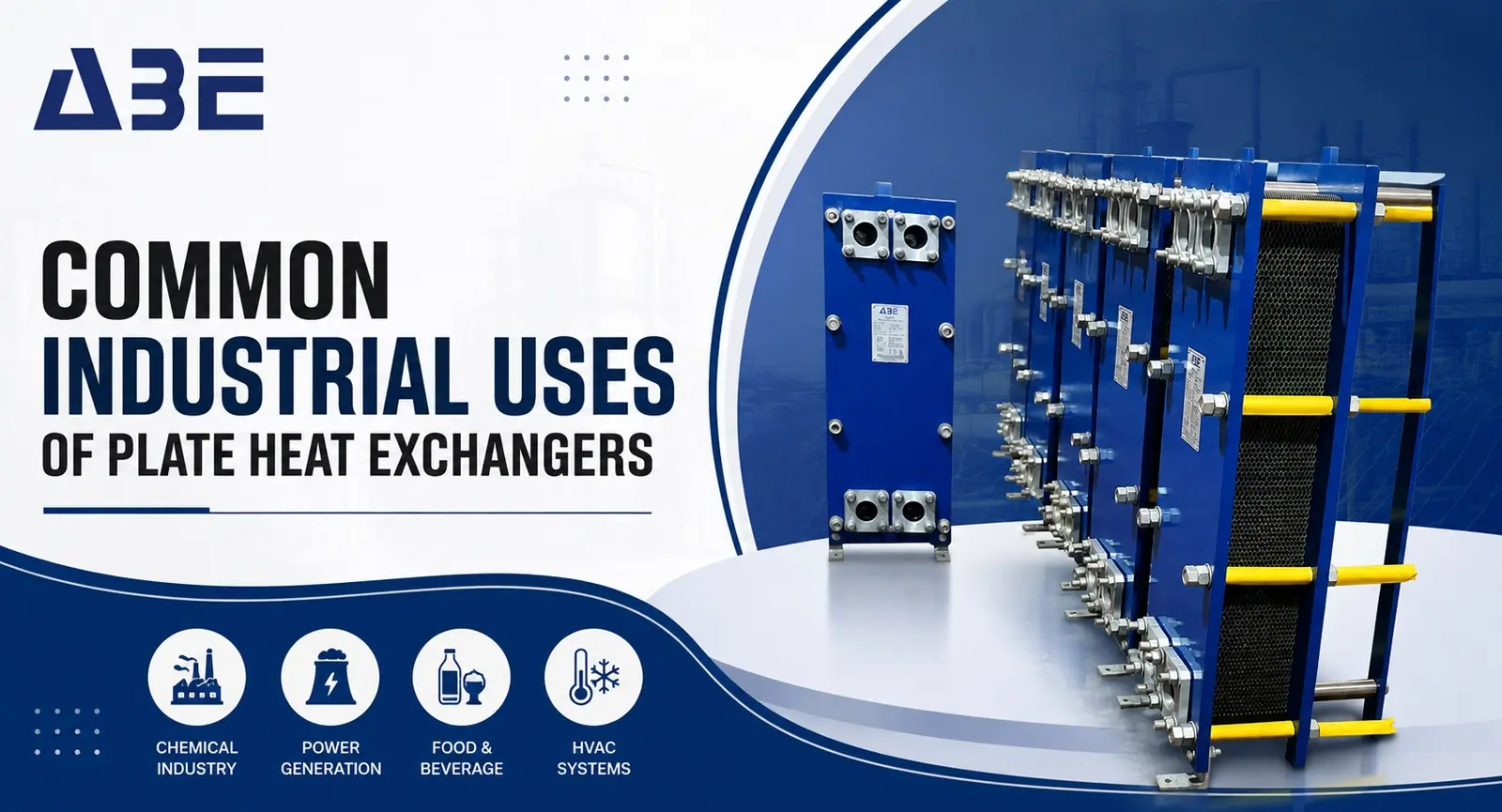
Plate heat exchanger installations are found across many sectors:
- Food and beverage: Pasteurisation, product heating/cooling, CIP heat recovery.
- HVAC and district heating: Interface between primary and secondary circuits, domestic hot water, and chiller circuits.
- Chemical and pharmaceutical: Process heating and cooling, solvent recovery, reactor temperature control.
- Refrigeration: Evaporators and condensers in industrial chillers and cold storage.
- Power and energy: lube oil cooling, generator cooling, and waste heat recovery.
- Marine and offshore: Central cooling systems, jacket water cooling, fuel oil heating.
In each case, the combination of efficiency, compactness, and maintainability drives adoption.
What You Notice Only After the Unit’s Running
Efficiency gets most of the attention when people discuss plate heat exchangers, but several other advantages matter just as much once a unit is actually running in production. The following are things you consider once the unit starts running:
- Compact footprint means space savings in facilities where mechanical room space carries cost, particularly in retrofits where space is already tight.
- Easier maintenance access, since many plate designs can be opened and cleaned without removing the entire unit from the piping system, unlike sealed shell-and-tube alternatives.
- Scalability through added plates, allowing a plate heat exchanger to grow in capacity without replacing the entire unit, which offers flexibility as facility demands change over time.
- Lower fluid volume within the unit, which reduces both the physical weight of the system and how much fluid needs heating or cooling at any given moment, improving overall system responsiveness.
These benefits add up in facilities running continuous processes, where easier maintenance access alone can meaningfully reduce downtime during scheduled service compared to bulkier alternatives that need full disassembly.
Conclusion
A plate heat exchanger’s advantage isn’t just its compact size; it’s how much heat it can move through such a small footprint. What decides whether one lasts five years or fifteen comes down to a few details: the right plate material, the right gasket, and the right sizing for the work it’s actually doing. At ABE & HEX India Private Limited , every recommendation starts with those specifics, not just a standard catalogue listing, so the unit you install actually holds up under everyday use.
FAQs

Abe & Hex India
Since 2009, ABE & HEX has been manufacturing premium quality heat exchangers. We fabricate high-grade products to meet different industrial requirements.

Related posts
 Heat Exchanger