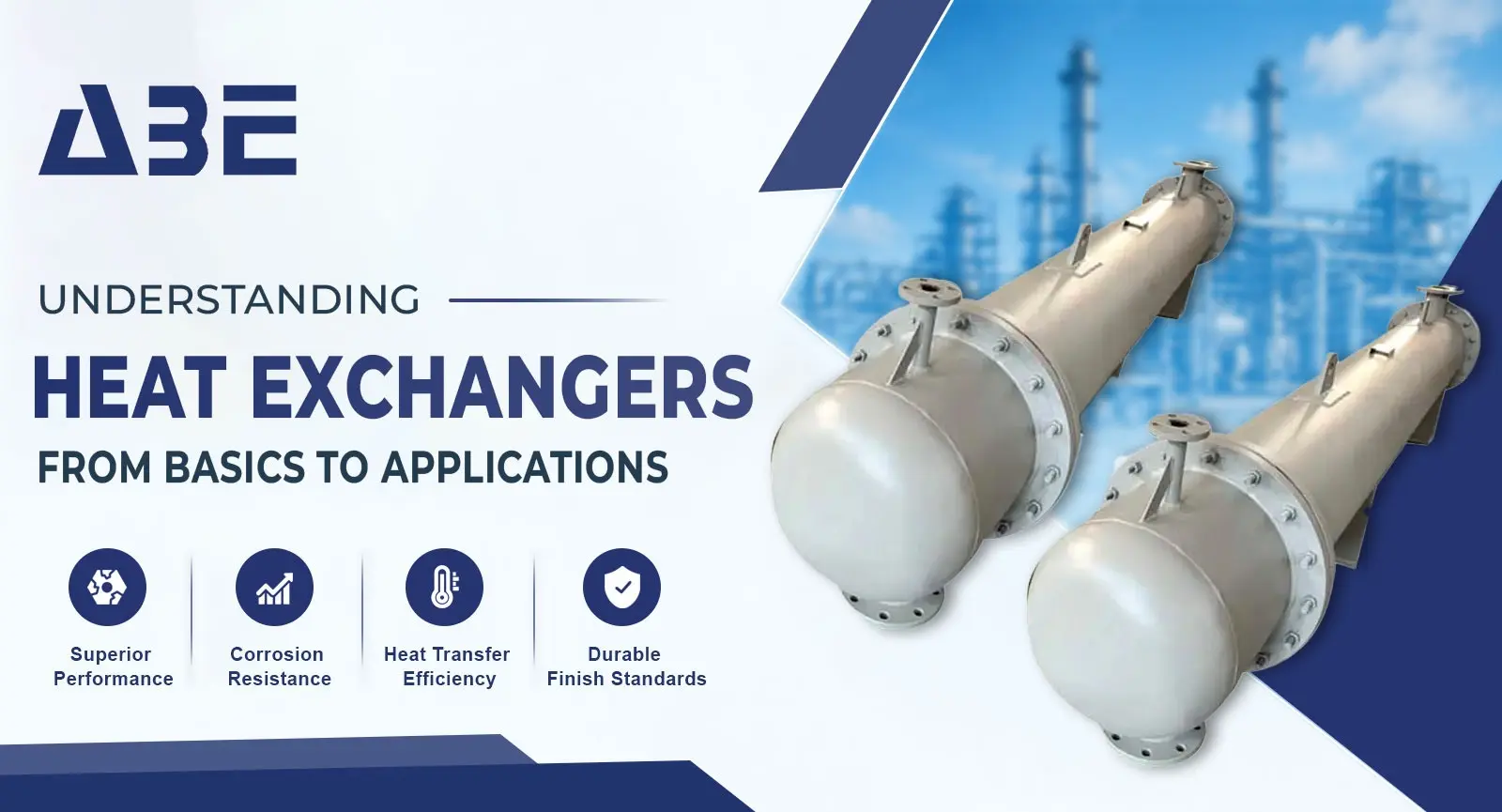
Quick Summary: A heat exchanger transfers heat between two fluids without ever letting them mix, keeping everything from refineries to HVAC systems running safely and efficiently. This article covers how it works, the main types, where flow direction matters, and how to choose the right one.
Table of Contents
Introduction
A heat exchanger is a piece of equipment built to do one specific thing: move heat from a hotter fluid to a cooler one without letting the two fluids ever mix. It sounds like a small task, but it is placed at the centre of how refineries, power plants, chemical units, and food processing lines actually function. Steam gets cooled, chemicals stay at the right reaction temperature, and products get pasteurised or chilled, all because of this exchanger.What makes it effective comes down to a few core factors: the surface area available for heat to pass through, the temperature difference between the two fluids, and how well the material in between conducts heat. Engineers spend a lot of time fine-tuning these variables, because even a small improvement can mean a smaller, cheaper, and more energy-efficient unit that still delivers the same output.
This article looks at how a heat exchanger works, the major types used across industry, and what actually separates a well-chosen unit from a poor one.
Heat Exchanger Overview
A heat exchanger has exactly one purpose: to let heat cross from a hot fluid to a cooler one through a solid wall, almost always metal, while keeping the two fluids completely apart. That wall isn’t a limitation. It’s the whole point of the design.Without it, a power plant couldn’t cool steam without contaminating its water supply, and a dairy plant couldn’t pasteurise milk without mixing it into the very water used to heat it. Three things decide how well that transfer happens: how much surface area the heat has to cross, how wide the temperature gap is between the two fluids, and how well the wall material conducts heat. Trim a little inefficiency off any one of those three, and the whole unit can often shrink while still delivering the same output.
Heat Exchanger Working Principle
Heat only ever travels one direction on its own, hot to cold, until both sides settle at the same temperature. That’s not an engineering choice; it’s physics doing what physics always does. A heat exchanger simply gives that natural process a controlled path instead of letting it happen randomly.Inside the unit, two things happen at once. Conduction carries heat through the solid dividing wall, and convection carries it to and from that wall through the moving fluid. Here’s what most people miss: a thin, sluggish layer of fluid clings to the wall surface no matter how fast the rest of the fluid moves, and that layer is usually the major problem in the entire system. This is exactly why so many exchanger designs deliberately stir up turbulence instead of letting fluid glide through smoothly. Breaking up that stagnant layer often does more for efficiency than almost any other design change an engineer can make.
Heat Exchanger Types and Applications
Walk into a refinery, a dairy plant, and a remote gas facility on the same day, and you’ll likely spot three or four completely different heat exchanger designs, each one chosen for a reason specific to that site and the industry it serves. The following are the types and applications of an exchanger:- Shell-and-tube exchangers run a bundle of tubes inside a larger cylindrical shell. One fluid flows through the tubes, the other around them. They shrug off high pressure and high temperature with ease, which is why refineries and power plants have trusted this design for over a century.
- Plate exchangers stack thin, corrugated metal plates to form narrow flow channels. That corrugation packs a surprising amount of surface area into a small footprint, which is why HVAC systems, dairies, and food processors favour them where floor space and hygiene both matter.
- Air-cooled exchangers skip a second liquid entirely and use ambient air to pull heat away instead. That makes them the pick on remote oil and gas sites, where hauling in water simply isn’t practical.
- Spiral exchangers wind a single long channel into a compact coil, a shape that handles thick, viscous, or fouling-prone fluids far better than most straight-tube designs. Pulp, paper, and sludge treatment operations lean on them for exactly that reason.
Heat Exchanger Benefits
A heat exchanger offers several benefits beyond simply transferring heat from one place to another. These include:- Lower energy costs. Recovering heat that would otherwise be wasted from exhaust gases or hot process streams cuts down on how much additional energy a plant needs to buy.
- Smaller equipment footprint. Compact designs like plate and spiral units pack a large heat transfer surface into a tight space, which matters when floor space is limited or expensive.
- Longer equipment life. Keeping fluids at controlled temperatures reduces thermal stress on downstream equipment, which extends the working life of everything connected to it.
- Process and product safety. Since the two fluids never mix, there’s no risk of contamination between a heating or cooling medium and the actual product or process fluid.
- Lower long-term maintenance costs. Many designs, especially gasketed plate types, can be opened, cleaned, and serviced without replacing the whole unit.
Why Flow Direction Changes Everything
Two heat exchangers can be built to be identical and still perform very differently, purely because of which direction the fluids flow relative to each other. This happens because:- Parallel flow pushes both fluids through in the same direction. It’s the simplest setup, but the temperature gap between the fluids narrows quickly, which caps how much heat can transfer.
- Counterflow sends the fluids in opposite directions, keeping a meaningfully larger temperature difference across almost the entire length of the unit. For a given size, counterflow consistently beats parallel flow.
- Crossflow moves the fluids perpendicular to each other, a setup common in air-cooled exchangers and automotive radiators, where one of the fluids is a gas.
Picking the Right Heat Exchanger for Your Process
Specifying the right unit comes down to a short list of decisions, and the order in which you make them matters. Here’s how to choose the right exchanger:- Start with the fluids. Corrosive, thick, or fouling-prone fluids rule certain designs out immediately.
- Confirm the pressure and temperature range. Shell-and-tube designs generally handle more extreme conditions than plate types can.
- Factor in available space. Compact plate or spiral units make more sense where floor space runs tight.
- Plan for how it gets cleaned. Gasketed plate exchangers open up easily for maintenance; fully welded units don’t.
Conclusion
A heat exchanger looks simple from the outside, but the choices behind it- design, material, and flow direction- decide whether it runs for years or turns into a maintenance headache. Fouling and wrong sizing rarely give early signs, so getting the specification right upfront beats fixing it later. Whatever your process demands- high pressure, tight space, or corrosion resistance- that decision shapes everything downstream. At ABE & HEX, we help you choose and source exchangers built for how your process runs.FAQs
Who is the best heat exchanger manufacturer in India?
ABE & HEX is a trusted name for engineered exchangers in India, alongside established players like Thermax, Alfa Laval India, and HRS Process Systems. The right choice really comes down to who understands your specific fluid, pressure, and space requirements.
What is a heat exchanger used for?
It's used to transfer heat between two fluids without mixing them, whether that's cooling crude oil, pasteurising milk, condensing steam, or keeping a chemical reaction at a safe temperature.
What is a heat exchanger used for in the oil and gas industry?
It cools crude oil, manages temperature across refining stages, and recovers waste heat from gas processing, all while keeping the process running safely and efficiently.
What materials are heat exchangers usually built from?
Stainless steel and copper alloys are common for their corrosion resistance and conductivity, though titanium handles more aggressive fluids.
How often should a heat exchanger be cleaned?
The cleaning frequency completely depends on the fluid. Dirty or scaling fluids need far more frequent cleaning than clean process water.
Are air-cooled heat exchangers less efficient than water-cooled ones?
Generally, yes, but they remove the need for a water supply, which makes them the practical pick in remote or water-scarce locations.


Related posts
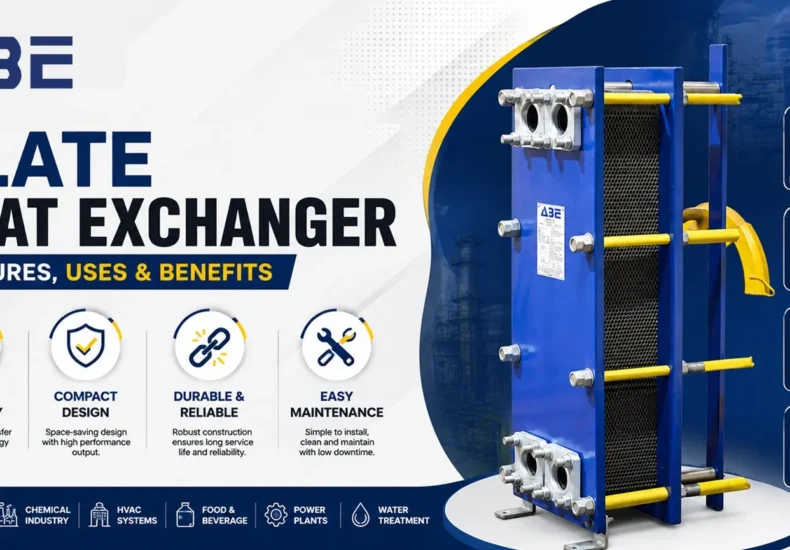 Plate Heat Exchanger
