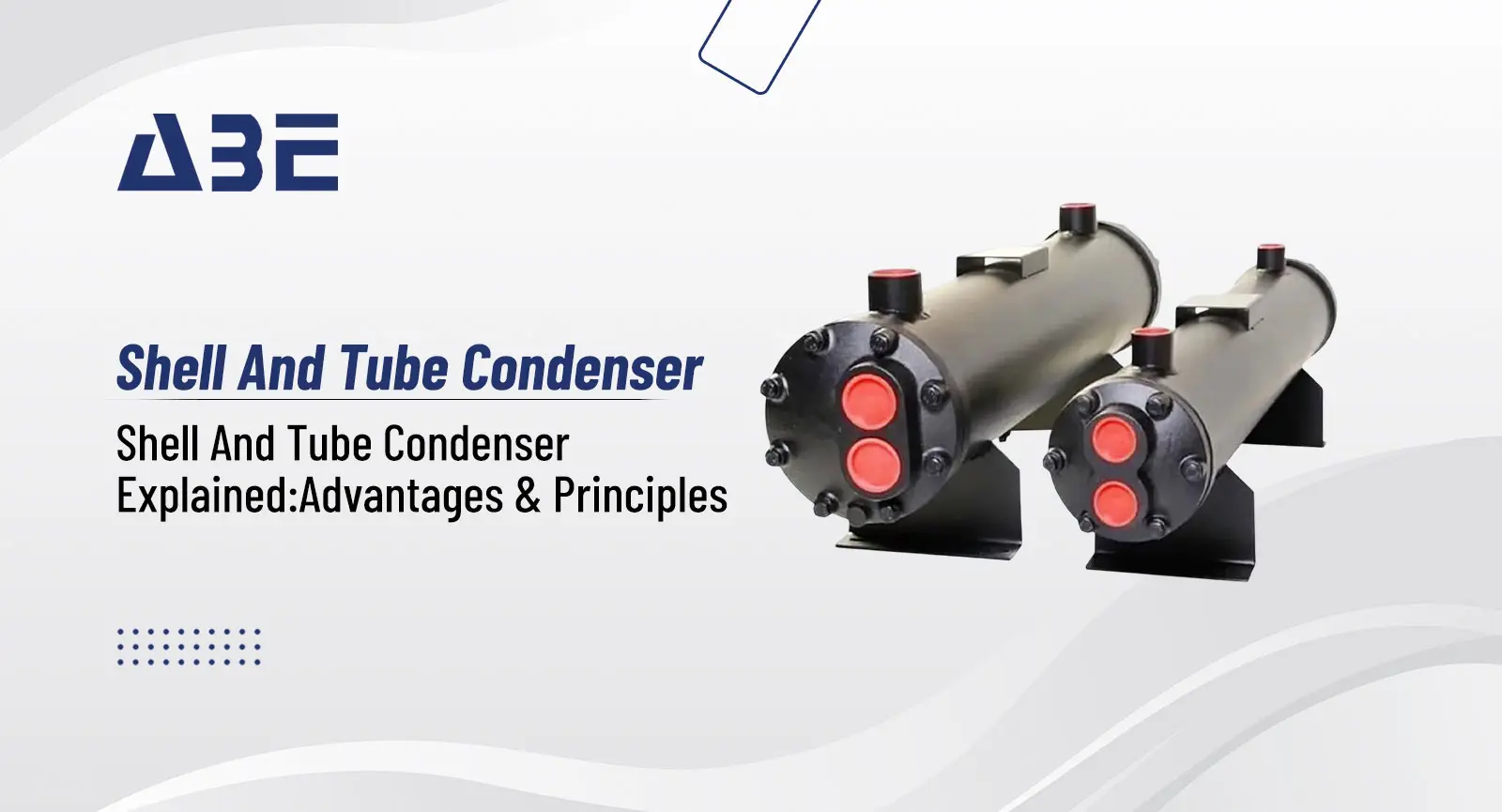
When a system is working with heat, someone has to take care of that heat; things don’t run properly for long. That’s where a shell and tube condenser is helpful. It simply helps cool down hot vapour and turn it back into liquid, so the process can keep going without stopping. Many people prefer this because it is very easy to work with and there are no complications while working. You’ll usually see it in places where work runs continuously and can’t afford interruptions. Once it’s set up, it just does its job without needing much attention. In this article, we’ll keep things simple and go through how it works, where it’s used, and why it still makes sense in real working conditions.
What Is a Shell And Tube Condenser?
If you open one up, nothing is confusing about it. A shell and tube condenser has an outer body, and inside that, there are multiple tubes.
In simple terms:
- One side carries the hot vapour
- The other side carries cooling water
- Both stay separate but exchange heat
- This cools the vapour and turns it into a liquid
It’s a basic setup, but that’s exactly why it’s trusted.
How It Works (Basic Principle)
The work is not complicated. It’s just heat moving from one place to another.
What actually happens:
- Hot vapour enters the system
- Cooling water starts flowing through the tubes
- The heat shifts from vapour to water
- As it cools, vapour becomes liquid
- The liquid is collected and used again
That’s the full working of a shell and tube condenser, no complex steps, just steady cooling.
Where It Is Used
You’ll mostly see a shell and tube condenser in places where work doesn’t stop.
Common areas:
- Power plants where steam needs to be cooled quickly
- Chemical plants where vapours are part of the process
- Oil refineries dealing with heated liquids
- Refrigeration systems that run continuously
- General industrial setups needing steady cooling
It’s used where failure is not really acceptable.
Advantages of Shell And Tube Condenser
This is why people keep going back to it instead of replacing it.
What makes it useful:
- Takes rough use easily: Handles pressure and heat without giving trouble
- Strong build: Not something that wears out quickly
- Easy to deal with: Cleaning and maintenance are manageable
- Fits in many systems: Can be used in different types of setups
- Keeps running: Doesn’t stop or fail without reason
It’s not about being modern, it’s about being dependable in real work.
Why Industries Still Stick With It
Even with so many new options in the market, many industries still go with a shell and tube condenser. The reason is not complicated; it’s something they are already comfortable using, and it gets the job done without creating confusion.
- It doesn’t need someone watching it all the time
- If there’s an issue, it can be sorted without much delay
- It works fine even when the fluid isn’t perfectly clean
- It runs steadily without sudden ups and downs
In real working conditions, people usually prefer something they understand and can rely on, rather than trying something new that might not behave the same way.
Conclusion
Choosing the right condenser shouldn’t be a tough decision. While there are many options out there, the shell and tube condenser remains the industry favourite simply because it’s tough, reliable, and easy to fix when things get messy. It’s the kind of equipment you can count on to keep your facility running without constant babysitting. At ABE & HEX, we focus on building that exact kind of durability into every unit. We’re here to help you keep things cool, efficient, and completely stress-free.

Abe & Hex India
Since 2009, ABE & HEX has been manufacturing premium quality heat exchangers. We fabricate high-grade products to meet different industrial requirements.

